
Does Insurance Cover Sober Living? The Truth Most Programs Won’t Tell You
When people start looking into sober living, one of the first questions that comes up is about insurance.
It’s a fair question. Treatment centers take insurance. Detox takes insurance. Therapy takes insurance. So it feels logical to assume sober living might work the same way.
But this is where things start to get confusing.
The short answer is that insurance usually does not pay for sober living housing.
And for a lot of people, no one explains why.
Does Insurance Pay for Sober Living?
In most cases, insurance does not pay for sober living housing.
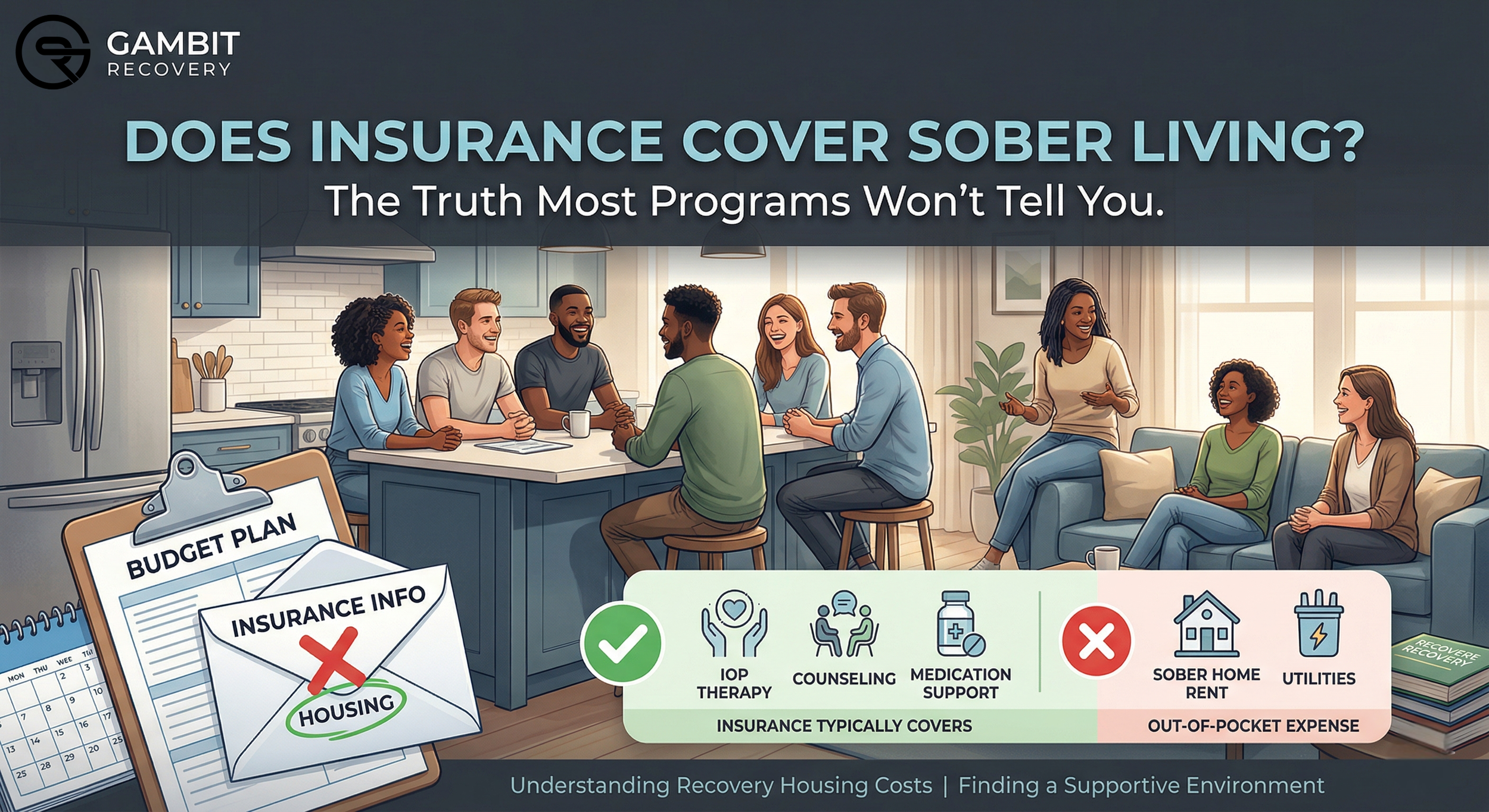
Sober living homes are typically considered recovery housing rather than medical treatment. While insurance may cover services like outpatient therapy, psychiatric care, or medication management, residents are usually responsible for paying the housing or program fees directly.
Why Insurance Usually Doesn’t Cover Sober Living
Most sober living homes are not medical providers.
They don’t offer licensed clinical treatment inside the house. Instead, they provide structure, accountability, community, and a stable place to live while someone rebuilds their life.
What is the difference between sober living and halfway houses?
Insurance companies are set up to pay for healthcare services.
That includes things like:
detox
inpatient treatment
outpatient therapy
medication management
psychiatric services
Housing itself typically falls outside of that system.
Even though sober living plays a huge role in long-term recovery, it’s generally viewed as a living arrangement rather than a billable medical service. Even when insurance doesn’t cover it, a lot of people still choose sober living because of the impact it has long-term—here’s a full breakdown of is sober living worth it.
Why So Many People Think Insurance Covers It
Recovery doesn’t happen in neat little stages.
Someone might leave treatment, move into sober living, and start outpatient therapy all at the same time. When that’s happening, it can feel like insurance is paying for everything.
In reality, insurance may be covering the therapy or clinical support — not the actual rent or program fee for the sober home.
That distinction matters. Especially when people are trying to plan financially.
It also gets blurred by how some programs market themselves.
In certain situations, housing is presented as if it is fully connected to treatment. Phrases like “insurance accepted,” “treatment included,” or “housing covered” get used in ways that are not always clearly explained. Someone who is new to recovery, stressed about money, and trying to make the next right move may reasonably assume the entire living arrangement is being handled.
Sometimes there are real clinical services involved. Other times, the connection is much looser than it sounds.
There are also cases where individuals move into housing expecting regular therapy, structured outpatient programming, or case management that never truly materializes. Weeks go by and they are left trying to figure out what they are actually paying for and what insurance was supposed to cover.
Add in the reality that families are often helping coordinate placements from a distance, and it becomes even easier for misunderstandings to happen.
Not every program operates this way. Many are honest and straightforward about costs and services. But enough confusion exists in the space that it’s important for people to slow down, ask direct questions, and understand exactly what is being provided before committing.
Clarity upfront can prevent a lot of stress later.
Situations Where Insurance Can Still Help
Even though it usually doesn’t cover housing, insurance can still make sober living more manageable.
For example, many residents are enrolled in:
Intensive Outpatient Programs (IOP)
counseling services
psychiatric appointments
medication support
Insurance may pay for those services.
There are also situations where people qualify for scholarships, state funding, or nonprofit support that helps offset housing costs.
That’s not insurance coverage, but it can reduce the pressure.
Why Most Sober Living Is Paid Out-of-Pocket
Recovery housing is designed to help people transition back into real life.
That often includes things like:
getting a job
managing money
paying rent
building routines
These responsibilities are not just practical. They are part of the growth process.
Learning how to show up for work. Budgeting for the week. Contributing to a household. Following through on commitments. These are small things on paper, but they carry real weight in recovery. They rebuild confidence. They restore dignity. They give people a sense that they are moving forward instead of being carried.
Self-sufficiency is not punishment. It’s purpose.
When someone begins supporting themselves again — even in simple ways — life starts to feel different. There is ownership. There is direction. There is something to protect.
Most sober homes charge a weekly or monthly program fee that covers housing, utilities, and the structure of the environment. It’s usually straightforward and transparent.
Residents know what they are responsible for. They know what they are working toward. And over time, that stability becomes part of the foundation for long-term recovery.
At least, it should be.
Red Flags to Watch For When Insurance and Housing Are Mentioned
Not every program explains things clearly.
If insurance comes up during the housing process, slow down and make sure you understand what is actually being offered.
Here are some warning signs worth paying attention to.
They ask for your insurance information but provide no real services
If a home is only offering a place to live with house rules and peer support, there may be no legitimate reason for them to collect or bill your insurance.
It’s okay to ask direct questions.
What services are being billed?
Who is providing them?
How often will they happen?
You should not feel like you’re chasing answers.
They promise therapy or outpatient treatment that never shows up
Sometimes people move into housing believing counseling or group therapy is included. Weeks go by and nothing is scheduled. No providers. No structure around those services.
Housing should not be marketed as treatment if treatment is not actually part of the program.
They say the housing is “free with insurance” but can’t explain how
If everything sounds vague, that’s usually a sign to look closer.
Legitimate programs can explain:
what insurance is covering
what the resident is responsible for
what services are being delivered
You deserve clarity before you move in, not after.
You are discouraged from working
One of the goals of sober living is helping people rebuild independence.
If someone suggests you don’t need to work because insurance will handle things, that can create long-term problems. Stability comes from participation in life, not avoidance of it.
You’re being pushed to sign paperwork you don’t understand
Recovery is already stressful. Financial agreements and insurance authorizations should be explained in plain language.
If you feel rushed or pressured, take a step back. Talk to family. Talk to a trusted professional. There is no reason to sign something you don’t fully understand.
Excessive appointments or testing with no clear purpose
Clinical services should support recovery, not feel like a revolving door of obligations. If transportation, testing, or appointments seem disconnected from your actual needs, it’s okay to ask why.
Good programs don’t operate like a billing machine.
The Bigger Picture
Insurance plays an important role in treatment.
But recovery doesn’t end when treatment ends.
Sober living exists in the space between clinical care and full independence. It gives people time to stabilize, reconnect with purpose, and learn how to live differently.
Understanding how insurance fits into that process can make the next step a lot less overwhelming.
If You’re Trying to Figure Out Your Next Move
Ask questions.
Get clear on costs.
Understand what services are included and what are not.
The goal isn’t just to find a bed.
It’s to find an environment that supports long-term recovery and real forward movement.
If you’re comparing options, it can also help to understand what sober living typically costs and what affects pricing.
What is Promise to Pay sober living?
Frequently Asked Questions:
Does insurance ever fully cover sober living?
In most cases, no. Insurance may cover clinical services connected to recovery, but housing itself is usually paid out-of-pocket.
Can I live in sober housing while using insurance for outpatient treatment?
Yes. Many people do this. Insurance may pay for therapy or medical support while the resident pays for housing.
Why do some programs ask for insurance information?
Sometimes housing is connected to outside clinical providers. Other times, it’s important to ask what services are actually being billed.
What should I ask before moving into sober living?
Ask about total cost, expectations around employment, drug testing policies, curfews, and what recovery support is built into the environment.
If you or someone you love is struggling with addiction, Gambit Recovery offers structured sober living homes in Arizona, California, Washington, and Missouri — founded by people who've been there.
Call 833-4-GAMBIT · 833-442-6248
Or if you're a family member searching for someone you love: For the Families